quickedit{display:none;}

Monday, 10 October 2016

Fortified towns and washing day blues

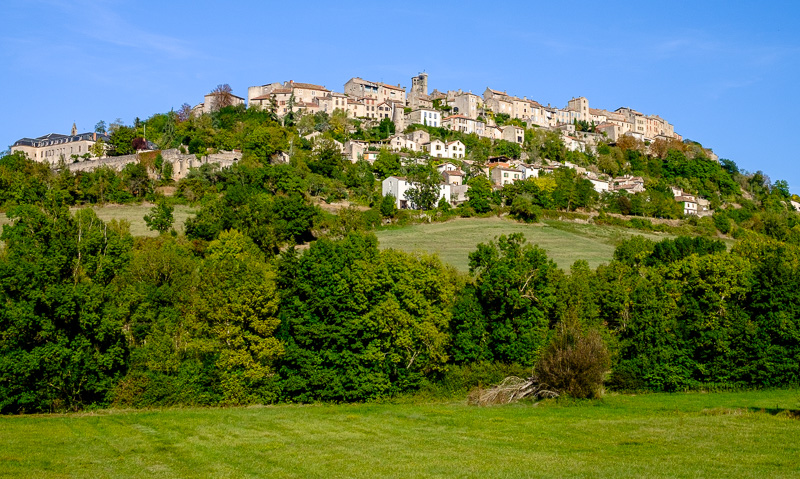
Cordes sur Ciel (Cordes on the sky)
Cycling canals has again featured in our days, we pass people walking their dogs and mostly all of them wish us ‘bonjour’. We started cycling the Midi canal at Agde on the Mediterrean cost – it seemed to be a neglected part of the canal with rutted clay tracks, however after an hour it improved. The canal is lined with plane trees – some had succumbed to the an incurable tree disease and had been removed, the others all have an individual numbered tag, so they are being monitored. The trees are just starting to change colour and there is an overall golden look to the leaves which reflects in the water. We moved camp and followed the canal further west to Castelnaudry which has an enormous canal basin, it is impressive with ancient houses cascading down to the canal edge. Dotted along the canal are houses for the people who operate the locks, all built to the same plan and using the same materials – gold coloured stone and pale green wooden trim.

Canal du Midi
 I had seen pictures of the stunning old part of Carcassone but was still moved when I looked up from the satnav’s screen to see the stunning La Cite. Surrounded by ramparts topped with conical witches hat roofs – it all looked too fairytale like. Inside was a different matter, shops selling stuff to tourists, places to stay and restaurants. It has been a fortress for nearly 2000 years, the battlements are in a zigzag fashion with two rings of walls, the site overlooks the slow moving, peaceful River Aude. As there wasn’t much too see we sat at a cafe where I had a Pastis and we shared a caramel glace (bowl of icecream). Carcassone itself (the lower town) was well preserved and an interesting place to visit.

Carcassone

Stuart cycling near canal
Hilltop towns with steep cobbled streets and usually an old castle are a feature in the Aveyron Valley. Chausson is left somewhere at the base of a town, and because the season has waned we don’t have any parking problems. The weather is warm in the late afternoon, around 26 celcius but without humidity and wandering around these really old hamlets and fortified towns is a total pleasure. We stayed a couple of nights at Cordes sur Ciel which is a picture as you approach the town – medieval houses stacked up the steep hill, surrounded by fields and trees at the bottom.
My favourite towns so far are Najac and St Antonin Noble Val. Each town we chose to stop at has very old narrow cobbled streets with houses dating back to the middle ages, beautifully kept with very clean streets and attractive public areas.


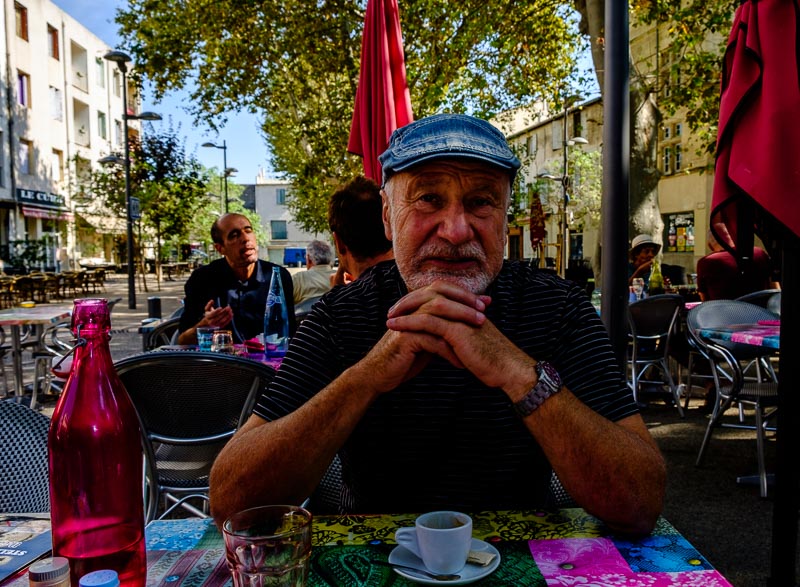
Cafe scene
We spent a couple of nights by the canal in Montauban, the Capitainere looks after both boats and motorhomes. I found a great stock of English books to exchange mine with, Stuart had his fill of wifi, and they had a washing machine. It was late in the day when I discovered the washing machine, paid my E5 for the key and put a load on. No problem, I used the incredibly slow condenser drier to dry the clothes. Then there was a delay while SOMEONE ELSE used the machine. I got my hands on it again very late and loaded the sheets in. Something went wrong and the machine wouldn’t spin, I managed to get it to release my linen and tried with a half load. The machine sat resolute, making a funny noise. The upshot is that the sheets got about 15 mins of wash and at 11pm I roped Stuart into helping me wring them by hand. He lashed up a washing line under our awing, the next motorhome was parked reasonably closely and they must have wondered what was going on with all the muttering and sheet-wringing. Into bed at 11.45.

The next morning the pure cotton sheets hadn’t dried much so the ever-resourceful Stuart zig-zagged some line above the dining area (actually the underneath of the raised bed) using rings attached to the ceiling. We slung the sheets across the lines then drove off – the windows in the cab wound down and the heater blasting. The sheets were flapping in the back while I supervised the towel and pillowcases on the dash. They were dry-as, quick-as.

For the first time I put my washing machine into action. It is a super sturdy clip-lock box with extra seals – idea from Ourbumble.com. In the box I put some warm water, detergent and my woollen Icebreaker clothes. As we drove along they were gently agitated. We stopped at an aire with fresh water, time for a rise and the laundry hung in the shower to drip dry. Good, but sheets are probably beyond its capability without a spinner.

We spent a night at the aire at Peyrusse Le Roc, we didn’t know what to expect as it was well out of the way, but a good price. There had been brown signs indicating an historical site and we pulled up to see single towers, one perched on a huge mass of rock pointing its finger up to the sky. The remains of another fortified village.
We explored the area the next morning – the present hamlet was totally deserted and so we picked our way through the abandoned medieval village ruins. There are some signs in French giving a clue as to what we were looking at. All a bit surreal really.

Rocamadour
Rocamadour, we ended up staying for 2 nights, meeting a couple from England – Lesley and Paul. They had chosen the same vehicle as us and we swapped notes. They demonstrated their Roman blinds with magnets for adjusting the height. I swore we had missed out until I looked closer – viola! we had the same, so I can throw away my big ribbon that holds the blind up so Stuart can see what is coming on his left hand side.

The main attraction at Rocamadour is the chateau and chapels that cling to a vertical cliff in a spectacular fashion. The valley below seems a long way down. To top it off there were hot air balloons taking flight over the chateau, their burners making a noise like waves breaking on a beach.
As the sun rose, it lit up the balloons as they drifted across the valley and around the chateau, except for one – there is always one – which headed in the opposite direction, probably to the disappointment of the passengers.


Jane at Carcassone, photo credit Stuart


Trucking on is the name of the game and so we will be.

Monday, 3 October 2016

Provence Post


The bridge at Avignon - only half of it left
Provence is in the middle of the grape harvest, grapes are being towed to cooperatives for pressing. Tractors of all sizes are hauling high sided steel trailers overflowing with grapes, Chausson did a bit of grape pressing himself as there were bunches of grapes on the road and he ended up with purple splatter up his white sides.

We have visited a few places recently, the more memorable are Uzes, Pont du Gard, Avignon and Arles. St Jean du Gard was only memorable for our visitors - a tiny fluffy tabby and an elderly clergyman who resided in a nearby retirement home – we were sitting ducks in the motorhomes for these two. The tiny tabby tried to endear herself by sitting in our kitchen; the elderly clergyman spoke excellent English and tried a little preaching to keep his hand in.

Palais du Papes - Avignon
 Uzes is a charming Provencal hilltop town that Peta Mathias featured in one of her cooking series. A Ducal palace holds central position, apparently still occupied after being in the same family for 1000 years. The inner square and surrounds were paved in a pale gold limestone that had turned shiny and marble-like underfoot. There were lots of art galleries/ateliers (workshops) and fabric shops. We drove past the Haribo (sweets) museum at Uzes but I didn’t mention it to Stuart after the binge at the Valrhona museum

Pont du Gard, a Roman aqueduct built in the first century AD carried water from a spring in the aforementioned Uzes to a city where Nimes now stands. It is a supreme example of engineering and a UNESCO World Heritage Site. The volume of water transported by the aqueduct was more than needed, alot of it was used in fountains and pools as a show of wealth. We only wanted to see the bridge and not pay the E18 for the carpark attached to the seemingly compulsory museum so we backed up the truck from the ticket booth and parked down the road using Howard and Hilda to convey us to the spot.
 
Pont du Gard - photo credit Stuart
We stayed at Avignon in a motor camp for a couple of nights, it is beside the Rhone and looked across to the Palace of Popes which housed a succession of popes when Avignon was the seat of popes for a couple of hundred years. We visited a small art museum and saw a few paintings by French Impressionists, van Gogh and Degas spring to mind. Arles is my preferred town however, it had some seriously impressive Roman ruins including the cryptoportiques. To get to the cryptoportiques we went underneath the rather grand Hotel de Ville.   A bit spooky but incredible to think the Romans built this so long ago – it is thought it was the foundations for the forum (centre of commerce etc above) it contained huge arches and drainage systems.

Arles
With the money we saved from not visiting Roman ruins in Arles, we splashed out on an al fresco lunch in a square. Moules frites for me (really good – so much better than the Honfleur ones) small blue/black mussels with a creamy sauce and chips in a little wire chip basket. Stuart had (oh yes) – a hamburger


It was a short drive to Saintes Maries de la Mer in the CAMARGUE. All my boxes were ticked in short succession, I had seen the black camargue bulls unfortunately used in bull fights, white Camargue horses and pink flamingos sifting their beaks through saline marshland pools. I also saw rice that the area is known for producing, and the salt pans. It was a long drive to see the salt harvesting area as we had to skirt around the mouth of the Rhone – their salt production is huge and all used on the roads or in industry.

In Saintes Marie DLM, we looked at a few aires before going to a campsite that was big and busy. The office gave us a list of vacant sites and a map. We set off to find our way around and choose not one but also a back up site. We zigged zagged back and forth across the camp looking for empty sites that were in the yellow zone and also on the list of free places that they had printed out for us. People came up to us and offered to help and eventually we chose site 169. Back at the office they gave me a big block of yellow wood with 169 on it, an electronic swipe card so we could get out of the gate to the beach and a reference number for paying our account. Not sure what to do with 169 I put it in the windscreen, others I saw had hung it off wing mirrors, towbars, or number plates.

We took the swipe card and set off to find the beach, spotting a sandy track up over the dunes, we had found a shortcut – not to be, we were fenced in, we went up and down the camp roads and had a good gander at other camp accommodation like a couple of mice in a maze looking for the gate in the perimeter fence that led to la plage. It was during this second IQ test that I figured out the significance of the numbered block of wood – it deters people with yellow tags parking in the luxury red area.

The next day we took Howard and Hilda for a spin along a dike in the national park that stretches between the salt marshes and the Mediterrean, stopping at a lighthouse which is the midway point, at 13km from the town. The water and sky seemed to merge as one as we cycled along the low lying dike. We were not very high above the salt marshes where flamingos were busy sieving food from the lagoon. Ocassionally one would take flight showing the stunning colours under their wings – bright cerise tipped with black. They all refused to cooperate with Stuart for a photoshoot as did the white horses who also were more interested in their dinner than having a photo taken.

The Camargue area has a Spanish look, probably because it is not too far from the Spanish border. The traditional houses are small single storied and finished with white plaster, topped with a thatched roof that has a plaster coating along the roof ridgeline. They are supposed to be windowless but we saw windows.

   
Camargue horses
I have lost 70 photos since the last blog post, the lesson learned is to check the files have been transferred to a hard drive before re-formatting my memory card. I had to ask Stuart for a photo.

To cap this week – Stuart is on his third cap. The first cap is on a bus with his prescription sunnies in Italy, the second in a French church and the third is made of camoflague fabric. (Which makes him hard to find in a crowd). The cool dude that sold him the cap told him he was putting the caps on wrongly and gave him a lesson – only to say ‘plus grande tete’ (very big head). ‘Sir – how about this general’s cap?’ after Stuart discarded the a cap with bells on.

Lighthouse on dike
It has been a while since we cycled alongside a canal and the Canal du Midi is not far away so we will set ‘her inside’ the satnav to take us to a good place.
Flamingos


Saturday, 24 September 2016

Liquer, chocolate and a grand cirque indeed


Chausson climbed up a narrow winding road, mist was clinging to the the rock faces at the beside the road, autumn colours tinged the trees. We drove through narrow tunnels, under rock overhangs, across arched bridges to the museum of the Grande Chartreuse Monastery. We passed a couple of signs showing the outline of a hooded monk with ‘zone de silence’ underneath.


Public are not allowed at the Carthusian monastery; the monks spend their time in silence and contemplation only eating a meal together once a week in silence. Their life is not much different to when the order was established in 1084. The Grande Chartreuse museum is sited in an annexe and displays the monks’ life in their hermitages. There is nothing to distract them from their devotions. Their concession to comfort is a small wood burner in their room (they have to cut their own firewood). Every detail is austere and each hermitage contains a hatch with a double door where their food is placed, if they need anything they write a note and leave it in the hatch. They are self sufficient and the Chartreuse liquer they make is one of the ways they support themselves without alms. Pity there was no tasting, I haven’t had the pleasure.


On the way to the monastery
We have been covering some distance recently and found Tain l’Hermitage, a premium wine producing town on the opposite side of the river Rhone to where we stayed (Tournon sur Rhone). It is also home to Valrhona chocolate, probably the numero uno of chocolate manufacturers, established in 1922. A visit to their Cite du Chocolat was on the cards, there were interactive displays of chocolate manufacture and guides to tasting. It was so much better than the Ferrari museum with lots of samples. A new chocolate ‘Dussy’ had been created by accident in 2012 by leaving white chocolate to heat for a long time – it was caramel and slightly salty, I had to check it several times to make sure of it moreishness. I was well impressed with the whole experience and Stuart was daunted to hear that I didn’t feel like dinner after my little binge.


Chartreuse monastery museum
France seems to create us some ‘back up the truck’ moments when we realise we have been sent down the garden path by ‘her inside the satnav’, she is always trying to help us shave a km or two off our trip. We did witness a goodie though – a yellow Transit-type van came hurtling through a height barrier at a carpark in front of us, taking the barrier with it and dumping it in the carpark. This opened up the opportunity for some of Chausson’s white-box mates to get into the carpark and revel in forbidden parking.
Le Puy en Valey
We drove quite a long way across part of the Massif Central area, a cold, high, sparsely populated, windswept place to Le Puy en Valey. The town had a lot of extinct volcanic cones around it, we climbed up one of these to the ancient church on top, Chapelle Saint Michael of Aiguilhe built in 984, amazing to think it has stood so long. The intention was to visit some of the other ‘Puys’ (extinct volcanic domes) in the area but the weather was so-so and as we have a few extinct volcanic domes in Auckland, we decided not to bother.
Chapelle Saint Michael, Le Puy en Valey


A change of scene was needed, we were looking forward to a bit of warm weather and headed south to the Gorges du Tarn. We drove alongside the Tarn river on the narrow winding road, vertiginous in places. This clear jewel-green river snaked past lots of small villages, the towering grey cliffs splashed with ochre had formed into a deep gorge as the river cut its passage over the millenia. The same rock was the preferred local building material.

From age-old to nearly-new, – the viaduct at Millau. We stopped at the visitors centre, the viaduct was enormous – extremely elegant, it looked as if it was too fragile to support itself. It stands 343m high and 2460 m long and has 205,000 tonnes of concrete in the piers and abutments. A French bridge designed by a British architect, Lord Norman Foster. My camera lens was not wide enough to get all 7 piers in. The bridge is a great boon alleviating summer traffic jams as French holidaymakers head to the coast.


St Enime, Gorges du Tarn
Back to age-old in the same day, a medieval fortified village La Couvertoirade. Billed as a perfect ‘Templar’ village, it actually is not quite that old. It is almost untouched by renovation and has only 40 inhabitants who survive off tourism. The setting is magnificent – in the Regional Park of Grand Causses. The landscape has low rolling hills, limestone outcrops and is devoid of buildings. The land supports only rough white grasses and scrubby low growing trees. The sun lit up the landscape and the huge blue sky had fluffy white clouds – a little like central Otago. We saw two lavognes, paved water holes for watering flocks of sheep, whose milk is used for Roquefort cheese.


Millau Viaduct
About 30km from the Templar village is the Cirque de Navacelles. We have never seen anything like it – the cirque is an oval plain lying at the bottom of a 150m deep trench of the Vis gorge. Centuries ago the river changed its path and left a circular fertile plain with an ‘oyster’ of an island sitting high and dry in the middle of it. The ‘oyster’ had vestiges of the old stone walls used for growing crops in terraces still visible. Looking down into the canyon I was reminded of an open cast mine with two tiny hamlets set to one side. I really can’t describe this amazing place, best to Google it. The Cirque was a long way from anywhere, except for a tourist office. I asked where we could park for the night and we were allowed to stay on the spot. It was something like parking on the edge of the Grand Canyon with the sun casting a warm glow over limestone formations and the sky washed with a magenta hue. We were joined by two others vehicles who had also ended up at the Cirque outlook, after the last of the day trippers left it was very peaceful.

We are now truly in the Langedoc-Rousillion area and after we have had our fill we will be heading to Provence to fill in the bits we have missed before.

A lavonge
A fortified Templar village


Monday, 19 September 2016

Mountain passes, marmots, more of France


The mountains beckoned again and the Gran Paradiso National Parc in Italy rates well so we headed up one of its valleys for a couple of nights. The driving was on snakey narrow roads with rock overhangs jutting over our path. On the way Stuart had a ‘what if we don’t have enough diesel moment’. He had put a dribble in at the motorway service area. “Not paying those prices”, the gauge continued to drop the further we got from civilisation. Finding a local self serve pump saved sweat and worry. The aire was lovely with snowy mountains in the distance and a glacier-fed river running in front of us.

Camping spot 
Contestants in a 330km endurance race passed by us. None of them looked happy, leaning heavily on their walking poles. We followed some of their footsteps in a circuit walk that ascended 1000m and took about 5.5 hours across alpine meadows. On a scale of 10 it must have been a 9 for loveliness. I have done a few mountain walks and that one had all the criteria for a good one. There were lakes, waterfalls, small stone dwellings, clear pools of emerald water, house sized boulders, fat marmots, small marmots loping around calling to each other in a high pitched warning. The pleasantness evaporated a little on the descent through a coniferous forest which seemed longer than the ascent. The leki pole Stuart made me from a pine branch was a perfect for a cripple. 

In France, photo stop, spot the photographer
Gluttons for punishment, we packed up the truck after the hike and pressed on toward the French border, stopping just short of the Mont Blanc tunnel in our quest for a LPG refill. There was an aire near the Mont Blanc cableway so we stopped for the night. An almight icy blue and grey glacier hung from the side of this massive mountain and I craned my neck trying to take it all in. It loomed above the motorway thick with traffic. We had pizza at a nearby restaurant and emerged to find Chausson dwarfed by huge articulated trucks. The aire obviously doubled as a truck stop.
Never mind, everyone was sleeping, the drivers were up early though – warming up their diesel engines for an unseemly long time before setting off at 7.00am.

Top of the Petit St Bernard Pass
Perfect clear weather and roads graced us the next morning as we travelled over the petit St Bernard Pass to Bourg St Maurice in France. It was a real mountain pass with wide open windy spaces and ski lifts at the top. Mad people cycling and doing that Nordic roller blading thing. Lots of zig zags going down before we set off for a recommended camping spot near a little hamlet overlooked by Mont Blanc. It was perfect – no fees, beside a river, mountains all around, and a few others to share the spot with. We spent some time with a Dutch couple, a retired fireman and teacher Chris and Carla. Chris shared a file of the map of France he had created, something we will use for route planning.
Wooden marmot, border between Italy and France

Annecy
Others had told us Lake Annecy was worth visiting so we set off, again over another mountain pass. I can’t feel smug about New Zealand having great scenery after driving past the lakes and mountains of the French Alps, too perfect and unpopulated. Annecy is a very old town, the pre-Roman bits have been built over, as have some of the Roman bits, however there is a lot of sixteenth century architecture of covered passages and arcaded houses divided by the Canal du Thiou. Its clear waters move quietly past the petunias and begonias hanging from bridge railings. We had taken Howard and Hilda from the campsite to the town centre as the traffic and parking is OTT.

The weather is starting to turn in Europe, the season is coming to a close. We have seen notices of camps closing and the tourists are starting to tail off in the moutain areas and Stuart is hankering for some warmer weather. One campsite we arrived at had closed the day before, but it was up a long curved drive overhung with trees and a little stream. The large turn around spot outside it proved to be the ideal wild camping spot – ‘wild’ but close enough to walk into town, access to the dump was a bonus as well.

Monday, 12 September 2016

Appenine Hills, Lucca, Pisa, Tuscany


The lowland plains around Venice are hot in the summer and we retreated again to the mountains – this time the Appenines on the border of Tuscany and Reggio Emilia. A campsite was at 1000m elevation and consisted of a series of terraces on a hillside, mainly funny little permanent chalets but a nice site was waiting for us looking out over the surrounding countryside. The land is very brown houses all shuttered up, the hills in the distance shrouded in a pale blue haze.

The camp man told us about a walk to a lake and Stuart bought some horrible polystyrene bread rolls from the camp shop to take with us on the hike. Two hours there and two back on a steep stoney path, we passed no one. Half way was a refugio with a solid steel door and concrete doorframe. All the windows tightly shuttered, no one was going to get into that hut uninvited.
The lake was showing signs of the hot weather, and the tide was low in places, there were some large fish in the lake with big mouths open to catch bread thrown by visitors. Yes, there were people who had actually driven up and strolled across to the cafe. We took advantage and had capuccinos, this being our closest substitute for a flat white.

After our walk we decided to treat ourselves to dinner at the restaurant in the camp, it is a large camp and had its own bar and restaurant. Scrubbed up, tidy as best we could only to find – “chiuso” (closed). Monday the restaurant is closed. Deflated, Stu bought some more polystyrene buns and we made hamburgers instead. We had a bun left over - I used it to stop some bottles rattling in the locker under a bench seat.


Tuesday, looking forward to pizza for a change, we presented ourselves again at the restaurant. “It is Tuesday, pizza is on Wednesday”. Oh – we chose a dish each and a shared starter from the menu. Something was lost in translation and I am still trying to erase the memory of the tough little pork schnitzel that I thought was beef ragu from my mind. There was only one other other table of diners, a Dutch couple; after we decided not to tempt fate with any dolci (dessert) we stood at the door as the first rain in 3 weeks hammered down. The Dutch couple thought they would wait it out and could they have coffee please. “Coffee is served at the bar next door, not the restaurant.” It is Tuesday, the bar is closed!

While staying in the camp we heard the sad news that our friend Mike had passed away in the weekend, we had been thinking of him and Morag while we were away.

Lucca, lovely Lucca was next on the agenda. An uneventful drive took us to an aire within easy walking distance to this gem. It is a walled town, even a double set of walls, that managed to get through the wars unscathed by bombs. Extremely elegant, it has enjoyed a prosperous past and had some lovely boutique shops and hotels. We did the 4km circuit on top of the walls that would have held 3 lanes of traffic if allowed. There were shade trees, a feeling of tranquility and being up high gave you a good view of the gardens below.
Lucca
Time to go. Pisa is only half an hour away. After an early morning cycle in Lucca around the walls and then through the town, we dumped the toilet, retrieved our parking ticket from our rubbish bin and inserted it into the payment machine. I feel uneasy when inserting actual folding money into machines but this one seemed to make the right noises and spat out a crisp E10 as change.


The barrier machine (something else I have a dread and mistrust of) sucked the ticket in and the barrier refused to raise. The machine flashed red. I tried talking into the machine and couldn’t understand the reply. An Italian man also bent over double, speaking to the disembodied voice in the machine on my behalf told me “a man is coming soon”. By this time we were the big white box just behind the barrier arm with 3 other big white boxes nose to tail behind us. Eventually the parking man arrived and let us all out. I suspect it might have had something to do with the grease from the rubbish on the parking ticket plus the scribbling on the back – still - ‘who can tell?”


Pisa, the leaning tower and all. Peeved off with Pisa – too many tourists, too far to walk, too much driving around trying to leave the place, too much that looked like Penrose/Mt Wellington. The only highlight was the little guided tour a law student provided when we got lost.

Volterra made up for Pisa – we toured the hilltop town after leaving Chausson with his white box mates at the bottom of the hill. The views across the countryside were very Tuscan but shrouded with a smokey haze – I think the summer has gone on too long and they need some good downpours to clear the air. Volterra can be put on the ‘big tick’ list.

Monteriggioni, less said the better. Was a nice little town once but little is the operative word and greedy is the second.

The route to Montepulciano in Tuscany was a bit rough, the roads were in poor shape but we made it to the aire unscathed physically. The aire was on the side of a hill with fabulous views of the surrounding countryside. Tuscan pines and pencil cedars, large square golden-stone farmhouses and rows of purpely/grey olive trees interspersed between vineyards. The vines had been pruned and we could see bunches of dark black grapes discarded on the ground so the remaining fruit would be larger and juicier.


Montepulciano, Tuscany
Montepulciano rates up there as one of my top Italian towns, not quite like Lucca but good in its own right. There were a couple of shops that had unexpected basements open to the public showing the remains of settlements dating back to Etruscan times. These underground chambers were many metres and levels below ground level - a wool scouring room, olive press, burial chamber, carpenter shop had been excavated and were open for the public to roam through.

Stuart found an excellent bottle of 2012 Tuscan chardonnay, of the type we used to get in NZ, too bad we only bought one. He has also found the ease of travelling on the motorways. The price to pay is tolls, Sunday on the motorway however is a special treat – no trucks.


We drove towards the Aosta valley and Nazionale del Gran Paradiso Parc, near the Swiss and French borders. It was hot and dusty in Tuscany so the mountains would be nice again. As a stopover I chose an aire close to the motorway in a ‘town worth visiting’ - even so I was shocked and amazed to find this concrete carpark stuffed to the gunwales with 115 Italian motorhomes – with one GB (us), two Germans and one Austrian. The town was pretty with a castle surrounded by a moat in the centre but it didn’t explain its popularity. Such are the mysteries of life. 


Sunday, 4 September 2016

Venetian ventures, Comacchio capers, ravishing Ravenna, Ferraris

A campsite was going to be the best way for us to see Venice, I eschewed the one with the swimming pool and shorter trip to Venice for one on the Brenta Riviera which Lonely Planet said was good for cycling around the renaissance villas. Lonely Planet let me down, the cycle paths were actually roads and the area was neglected and rundown. We cycled past villas that were very faded but obviously were top shelf real estate in their day.

We only visited one - Villa Widman, was not too far from the camp and probably a lesser example of the villas.The garden would have been lovely in its time and the reception rooms had some impressive Venetian glass chandeliers and frescos. When the villas were in their heyday Venetian society members would sail on barges up the river to stay in their villas for the summer.

A bus just outside the camp shuttled us into Venice, where we caught a vaporetto (little ferry) to San Marco square, lining up for a long time to enter the Basilica. I had forgotten my shoulder-covering scarf and had to wear a 1 euro tyvek brown square. I saved it for a makeshift groundsheet. The floor in the basilica was a series of lumps and dips – an obvious sign that the building is sinking.

Venice
Stuart’s patience was stretched to the max in my quest for a leather shoulder bag, as if I don’t have some at home! I finally chose a Smurf-blue bag that would fit my camera, waterbottle and sunglasses. We had bought a two day ticket each for the public transport in Venice and apart from the bus trips we used if on the water ferries to get about the islands that make up Venice.

We hadn’t made it to Murano previously, which is famous for its glassware, so our second day was to visit Murano and Burano. The day was very hot and sunny and at first the glass displays in the shops were exciting – lots of interesting designs and some shops made you feel dizzy with the colours and displays but after a while it got all a bit much. I would have loved to take a selection home but the transport would be a problem plus it was all fairly pricey.
Doges Palace
Ambulance, Venice
Murano didn’t offer a lot of restaurants for lunch but we chose one by the canal and I had a Campari and soda, served in a colourful local glass, as an aperitif before a nice ravioli dish of spinach and walnuts. Stu had a salad, this is a first and he thought it had made him thinner immediately. The sun tired us out but there was still Burano to explore, it was quite a long ride standing on the vaporetto from Murano to Burano.


Burano

Burano
Burano was an explosion of colours set against a deep blue sky. All the little terraced houses had been given paint jobs from the vivid section of the paint chart – any colour but bland. There were stalls selling lace which was the traditional craft of the area, I found a mask in the shape of a cat face to complement the two other masks I bought in Venice a few years ago. Another item to try and stuff into the Smurf handbag/satchel.

The vaporettos (or should it be vaporetti) work to a strict schedule, tying up, directing tourists and shoving off in a minute or two – all conducted with a lot of wharf bumping and gear graunching (Stu says they can’t graunch as they have hydraulic gearboxes – sounds like gear graunching and cavitation to me.) The canal water was churned up with private water taxis, delivery boats, tradesmens’ boats and even police and ambulance jostling for space. A very busy city both on the waterways and in the little lanes and backstreets that were linked by canals. Time to head off.

Burano
The road to Comacchio was very straight, it must have been Roman – it looked like someone got a ruler out and marked it on the map. Comacchio is a beautiful town on the Po Delta, on the eastern coast just south of Venice . It developed across a number of islands and is now joined by bridges, making canals the feature of the town. For some reason they had plastic decoy ducks in the canals along with a few imitation boats. The town featured brick as the preferred building material, for houses, canals bridges and churches which is a contrast to all the plaster towns we have been through. Incredibly hot, devoid of trees the town looked like it should have been in North Africa somehow.


Comacchio
I had my first experience of a huge Italian holiday park after leaving Comacchio, we went to the coast and had no idea what the campsite was like until I had gone through the lengthy registration process and they lifted the barrier arm. We were so far away from reception it justified a bike ride. There were campers that had filled their sites with more stuff than you could shake a stick at. Some covered their whole site with a canvas roof that had a large overhead fan suspensed in the middle circulating the air. We were placed opposite the family swimming pool with music pumping, that stopped at 6.30 but at 9.00pm a camp entertainment and karaoke started which was still going at middnight despite a clearly stated camp rule that said quiet was to prevail between 1 and 3 pm and after 11 pm.

The next morning we walked to the beach which was mainly covered in umbrellas and beach loungers for rent, I had forgotten that beaches in Europe are not free. It looked like a couple of oil platforms were offshore, perhaps they unloaded boats? A local chatty man who had the same amount of English as I had Italian, took a photo of Stuart and me. It was a little odd as Stuart was standing behind a wall, a couple of feet lower than me. While duly admiring the photograph, Stuart said he looked like a little person and the chap said – ah in Italy that is normal – the women are the bosses and the man does what he is told.

Ravenna had rave reviews so we were keen to visit. There was a spot for us in a carpark – Stuart did a bit of pruning climbing our little ladder to sort an overhead tree but all ok. We bought a ticket for 5 UNESCO sites that held murals in churches or former churches, some dated back to the 4th century. Incredible mosaics on the ceilings depicted religious scenes, I am immune to zealous religious art but these mosaics were in a different league. Tiny little tiles in deep jewel like colours and using a lot of gold, made up the murals. We had visited the basilica in San Marco in Venice and admired murals in the same style but these were a much better experience. The light that filtered through the upper windows cast a soft golden glow inside the churches. Some window panes looked like they were made of slices of agate. 
Ravenna market

The centre of Ravenna was gorgeous with lots of lovely shops and attractive squares that hosted market stalls selling upmarket garden and household items, and lots of al fresco cafes.

After sharing a 3 flavour gelato we walked back to the truck and drove to Imola and found the aire in front of the motor racing track where there was a motorbike race going on. Luckily it stopped after an hour. Stuart craned his neck to see the action and sniff the petrol but was out of luck. 


As we were so close to the Ferrari museum we hopped on the autostrada and crawled for hours in a Saturday traffic jam to the museum near Modena (think balsamic vinegar). The visit to the museum was all over quite quickly, there were more Ferraris per square foot in the street than we had ever seen before.


It is all rather hot and dry and a spell in the hills is called for – how about the Appennine Mountains that border Tuscany?